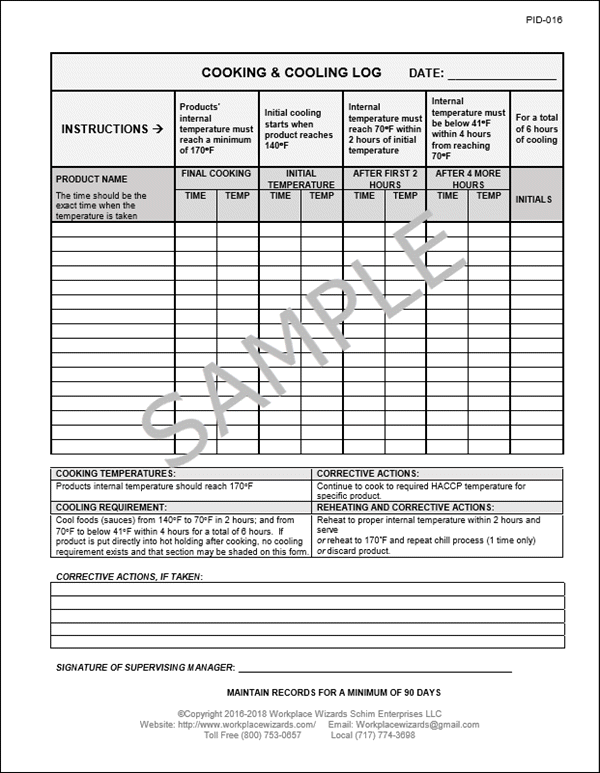
Restaurant Cooking and Cooling Log

🍳 About the Cooking and Cooling Log

The Restaurant Cooking and Cooling Log is a critical food‑safety form designed to help kitchens monitor and document safe cooking and cooling temperatures. This form ensures compliance with health department regulations and prevents foodborne illness by verifying that all cooked foods reach and maintain safe internal temperatures during preparation and cooling.

🔍 Why You Need a Restaurant Cooking and Cooling Log

Every restaurant must follow strict temperature guidelines to keep food safe. The restaurant cooking and cooling log provides a written record of these temperature checks, proving that your kitchen consistently meets safety standards. This documentation is essential for:

  • ✅ Health inspections
  • ✅ HACCP (Hazard Analysis Critical Control Point) compliance
  • ✅ Employee accountability
  • ✅ Foodborne illness prevention

Without accurate logs, your restaurant risks violations, fines, and potential health hazards. This form helps you stay proactive and organized.

🌡️ Cooking Temperature Guidelines

Proper cooking temperatures destroy harmful bacteria and pathogens. Use the Restaurant Cooking and Cooling Log to record internal temperatures for each food item before serving. Recommended minimum internal temperatures include:

  • Poultry (chicken, turkey): 165°F (74°C)
  • Ground meats (beef, pork): 155°F (68°C)
  • Seafood: 145°F (63°C)
  • Eggs for immediate service: 145°F (63°C)
  • Hot‑held foods: Maintain at or above 140°F (60°C)

Always use a calibrated food thermometer and record readings immediately after cooking. If any item fails to reach the required temperature, continue cooking until it does.

❄️ Cooling Temperature Guidelines

Cooling food safely is just as important as cooking it properly. The restaurant cooling log section ensures that food cools quickly enough to prevent bacterial growth. Follow these steps:

  1. Cool food from 140°F to 70°F within 2 hours.
  2. Then cool from 70°F to 41°F or below within 4 hours.
  3. Record both temperature checkpoints on the log.

Use shallow pans, ice baths, or blast chillers to speed cooling. Never leave food uncovered at room temperature for extended periods.

🧾 How to Use the Restaurant Cooking and Cooling Log

  1. Print and laminate the form for daily use.
  2. Assign a trained employee to record temperatures during cooking and cooling.
  3. Include:
    • Food item name
    • Time and temperature readings
    • Corrective actions (if needed)
    • Employee initials
  4. Store completed logs in a binder for at least 90 days for inspection reference.
  5. Review logs weekly to identify trends or recurring issues.

This process builds accountability and ensures your kitchen consistently meets safety standards.

cooking and cooling log

📉 Reducing Food Waste and Improving Efficiency

Pair this form with the Food Waste Sheet to track discarded items and identify patterns. Recording waste helps managers pinpoint overproduction, improper cooling, or equipment issues. Over time, this data supports better inventory control and cost savings.

⚖️ Compliance and Federal Guidelines

Maintaining accurate cooking and cooling logs is required by most local health departments. These records demonstrate that your restaurant follows safe food‑handling procedures. For official guidance, review:

These resources outline temperature standards, safe cooling procedures, and corrective actions for food service operations.

🔗 Related Restaurant Safety Forms

For a complete food‑safety documentation system, pair this form with:

Each form complements the Restaurant Cooking and Cooling Log, helping your restaurant maintain consistent safety standards and accountability.

🧠 Key Takeaways

  • The restaurant cooking and cooling log protects guests and your business.
  • Record temperatures at every stage of cooking and cooling.
  • Follow FDA and USDA guidelines for safe food handling.
  • Keep logs organized and accessible for inspections.
  • Use related Workplace Wizards forms for complete food‑safety documentation.

Keywords: restaurant cooking and cooling log, food safety temperature log, HACCP compliance, restaurant food safety documentation, cooling temperature chart, cooking temperature record, restaurant safety forms.

Cooking and Cooling Log
The Cooking and Cooling log helps your staff understand the importance of properly cooling food for storage. Every staff member needs to understand Food Safety a priority. Keep this log as a record and to track the cooking and cooling of your food. Use this in conjunction with other restaurant forms, like the Temperature Danger Zone chart.
Price: $6.00

Items in Your Cart

Your cart is empty
Visit The Shop

Leave a Reply